Ongoing management and operational care for cloud environments, so your teams can focus on delivering value while infrastructure stays secure, observable, and cost-aware.
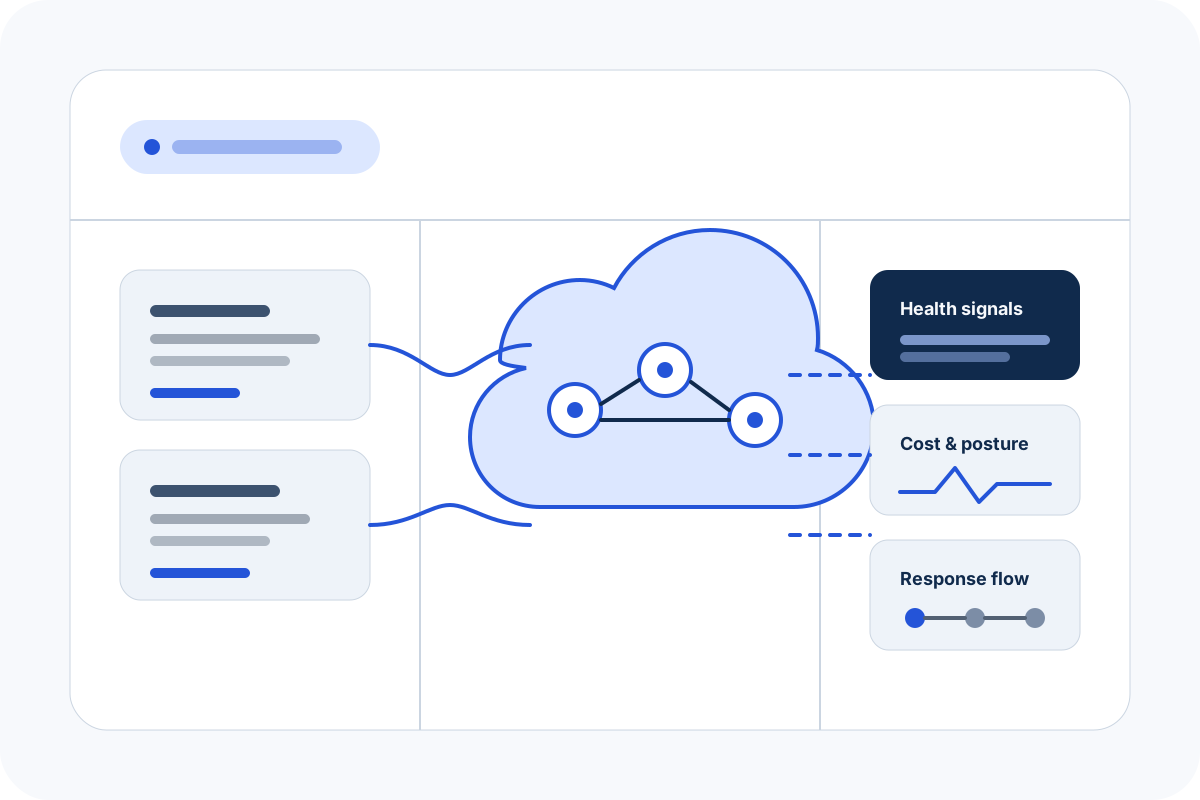
Abstract diagram of monitored cloud infrastructure with health signals, cost posture, and response flow.
01
Technical overview
Context, operating intent, and the technical value this service is designed to deliver.
Cloud platforms create opportunity, but production environments demand disciplined operational care. Our Cloud Managed Service provides the day-to-day engineering attention required to keep workloads stable, secure, and cost-aware—so your teams can focus on product and delivery rather than undifferentiated infrastructure operations.
We operate cloud environments with an emphasis on observability, defined response paths, and controlled change. The service establishes practical baselines for monitoring, access, patching, and cost review, then runs them as repeatable operational routines with clear reporting and improvement loops.
Primary outcome
Gain reliable day-to-day operations without carrying the full overhead in-house.
Problem space
Technical challenges this service addresses.
Common constraints and failure modes we account for when designing and delivering this capability.
!
Limited visibility into workload health, capacity, and failure conditions across environments
!
Slow or unclear incident response when alerts lack ownership, context, or escalation paths
!
Unplanned cost growth from underused resources, missing budgets, or weak usage reviews
!
Patch and maintenance debt that increases security exposure and operational risk
!
Operational knowledge concentrated in a few individuals instead of documented routines
Engagement scope
Boundaries, inputs, and outputs.
A clear view of what is covered, what is needed from your team, and what you can expect to receive.
Included
What we deliver
Day-to-day operational monitoring and review of agreed cloud environments and workloads
Alert triage, incident coordination, and guidance through defined response procedures
Routine maintenance planning, patch coordination, and configuration hygiene activities
Cost visibility reviews with actionable rightsizing and efficiency recommendations
Operational documentation, runbooks, and regular reporting on status and risks
Inputs
What we need from you
Access to relevant cloud accounts, monitoring tools, and operational communication channels
Inventory of critical workloads, environments, dependencies, and business priorities
Current runbooks, escalation contacts, maintenance windows, and change constraints (if available)
Visibility into existing alerts, incidents, and cost or usage reporting sources
Outputs
Artifacts and outcomes
Agreed monitoring and response baseline for in-scope environments
Documented operational routines, escalation paths, and maintenance practices
Recurring health/cost/risk reports with prioritized recommendations
Tracked action items to improve reliability, security posture, and operational clarity
Delivery model
Phased approach and execution flow.
A structured sequence of activities designed to produce clarity early, reduce risk, and enable sustainable operations.
Phase 01
Discovery and baseline assessment
We inventory workloads, dependencies, access patterns, and current operational practices to identify visibility gaps, risk areas, and the right management scope.
Phase 02
Operational foundation setup
We define monitoring coverage, alert thresholds, escalation paths, patch routines, and reporting structure so day-to-day operations are explicit and repeatable.
Phase 03
Run, respond, and maintain
We perform ongoing operational care—reviewing health signals, coordinating incident response, supporting maintenance activities, and keeping environments aligned with agreed practices.
Phase 04
Review, optimize, and mature
We analyze trends across incidents, performance, and spend to recommend practical improvements and evolve runbooks, controls, and routines over time.
Tooling and platforms
Technologies commonly involved.
Tools and platforms we work with in this service area, selected and adapted to your environment and constraints.
AWS
Linux
Grafana
Prometheus
OpenTelemetry
Engineering principles
Practices and controls we emphasize.
Guiding principles that shape how we design, implement, and operate this service for technical teams.
01
Observability before optimization: establish clear signals and ownership before tuning
02
Controlled change: treat maintenance and patching as planned, traceable operational work
03
Least privilege and access clarity for operational activities and integrations
04
Cost awareness as an operational concern, reviewed alongside reliability and security
05
Documentation and knowledge sharing to reduce single-person operational dependency
Detailed deliverables
Concrete outputs and artifacts.
Tangible work products, configurations, and documentation produced through this service.
Monitoring coverage and alerting baseline aligned to critical services and dependencies
Incident response workflow with triage guidance, escalation paths, and communication expectations
Patch and maintenance cadence covering routine updates and tracked remediation actions
Cost and usage review reports with optimization recommendations and follow-up items
Operational runbooks for recurring tasks, checks, and common failure scenarios
Periodic service review summarizing health, risks, changes, and improvement priorities
Technical FAQ
Common questions from engineering teams.
Answers to practical questions about scope, approach, and how this service fits your environment.
What parts of the environment are covered?+
Coverage is defined during onboarding based on your workloads, environments, and priorities. We agree on in-scope accounts, services, monitoring sources, and operational responsibilities so expectations are clear.
How do you handle incidents and escalations?+
We establish triage and escalation paths with your team, including communication channels and ownership expectations. Response focuses on timely assessment, coordinated action, and documented follow-up.
Do you make changes directly in production?+
Operational changes follow agreed access boundaries and change practices. Where appropriate, we coordinate maintenance and remediation activities with your team to keep changes controlled and traceable.
Can this work alongside our existing engineers or vendors?+
Yes. The service is designed to complement internal teams by providing defined operational routines, shared visibility, and documented practices rather than replacing your engineering ownership.
Fit and context
When this service is most relevant.
Situations and team contexts where this capability typically provides the most value.
Engineering teams running production workloads without a dedicated cloud operations function
Organizations that need stronger reliability, visibility, and cost control in AWS environments
Teams seeking predictable operational routines, clearer incident handling, and reduced maintenance debt
Related capabilities
Continue exploring.
Related services that often complement this capability across cloud, delivery, and operations.
02
CI/CD Automation
Automated build, test, and deployment pipelines that shorten feedback loops, reduce manual steps, and make releases predictable for every team.
Managing Code Repositories and Artifact Management
Structured repository practices and artifact management that give teams clear ownership, traceable history, and dependable access to the builds they ship.